In today’s Friday Feature we’re taking the World’s Fair Challenge. Don’t at us. Published December 19, 2025.
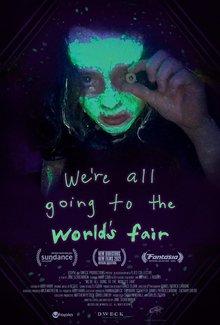
We're All Going to the World's Fair (2021)
Time is weird. Not sure if it seems like this film showed up before 2021 or more recently, so maybe that just means 2021 feels about right. Certainly by then our own sense of chronology and passage were deeply distorted. Then there’s time within the film, which feels like a recent contemporary moment but also somehow sort of late ‘90s. And maybe that’s the influence of 2024’s I Saw the TV Glow, which is very ‘90s, and clearly picks up on some of this film’s motifs. All of which complicate things for those of us who saw the TV glow before we went to the World’s Fair.
So that’s part of the vibe watching this film in late 2025, remembering how excited queer indie film watchers were in 2021, having had it on our watch list all this time and not getting around to it sooner. If we somehow caught the tone of the film—lonely, earnest, suburban existential—before seeing it, we might have been both drawn in and avoidant. If we knew there was an extensive ASMR scene, awkward and alarming bedroom dance/scream videos, and agitated middle-age floor-to-floor pacing, we’d forgive ourselves for not getting to this one for a few years.
But we were missing out on a gem. Those who did see this film before 2024 must have been thrilled with I Saw the TV Glow, which really lets air in the room and presents a fantasy world more attainable to its characters, whether or not they get where they want to go. While we appreciated that film, which we caught in its theatrical run, what’s special about it is so much clearer after seeing its predecessor. We eagerly anticipate Jane Schoenbrun’s next move.
If this is a film about internet (anti)sociality and connectivity without connection, it’s also about interface and apparatus. (It’s also certainly about gender, age, and power, as many have commented upon.) Streaming this film reminds us that we’re watching movies on our computers. Schoenbrun is good at stepping in and out of the laptop frame while maintaining the feeling that we see Casey alone in her room through her computer, even when the camera angle shows Casey and her laptop. That slight estrangement and eerieness of perspective keeps us on edge even as we have intimate proximity to the physical and emotional world of the character. We look at Casey’s face, eyes always brimming but never spilling over, as she watches herself and thinks about other people watching her. We feel like we watch her differently than JLB does (well named, as he’s an inverted, mixed up JBL bluetooth speaker with a bad connection—another alienated and alienating apparatus), but when we’re alone with him, and all we have to think about is Casey, we can’t help seeing ourselves there too. The World’s Fair (horror) Challenge runs through recordings, and if we play long enough, we see each other change. And of course these technologies, these trends, this mediated reality, change us. We’re also going to the World’s Fair, turning into something we don’t recognize. And we want to change, even if we don’t like the way these interfaces are changing us. Nor is this world fair. And that brings us back to I Saw the TV Glow, which might just show us a way out. 4 out of 5 sacs of blood.

—J †Johnson